About
MIT Sloan · Operations Research & Statistics
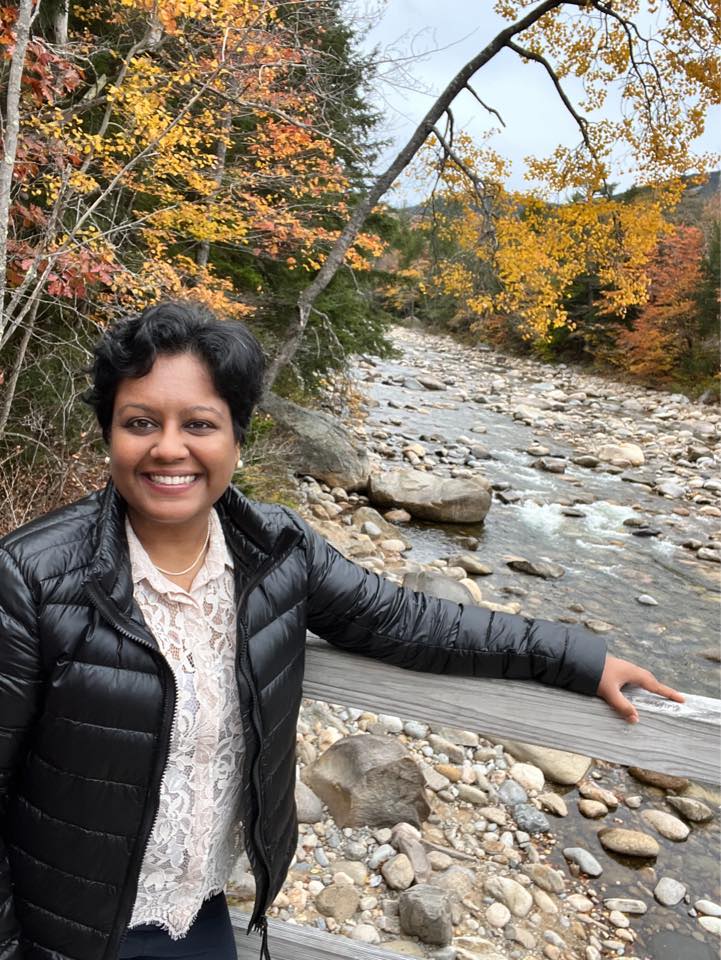
I am an Associate Professor at the MIT Sloan School of Management in OR & Statistics and a Class of 1947 Career Development Professor. I am a core faculty member of the Operations Research Center, and affiliated with LIDS and CCSE. I received a Ph.D. in Operations Research from MIT and was fortunate to be advised by Michel Goemans and Patrick Jaillet. I hold a joint Masters and B.Tech in Computer Science from IIT Delhi. My Erdős number is 2, and I’m on the scientific advisory board of Intrare.
Contact
first name and last initial at mit.eduE62-582 (or a coffee shop near MIT)
Support staff
Patrick W. McGillpmcgil19 at mit.edu
Latest news
Paper on scholarships to students to reduce filtering effect of middle schools, accepted to M&SOM. More updatesResearch: Rethinking Optimization in Today’s World
Optimization, machine learning/AI, and societal impact
Foundations of optimization were built for a world that no longer exists: clean data, fixed objectives, and static computation. Modern systems challenge each of these assumptions. Data are noisy, biased, and heterogeneous, shaped by how they were produced. Stakeholders disagree, and preferences often emerge only through interaction and language. Computation itself is increasingly heterogeneous. Solvers now combine classical subroutines, learned language models, specialized hardware, and quantum devices, each with their own cost and noise.
My group develops the mathematical foundations of optimization for this regime and carries them into consequential systems—from hiring, school admissions, and organ allocation to power systems, AI infrastructure, and quantum computing. Our goal is to expand what optimization can guarantee when the ingredients of the problem must themselves be learned, elicited, or composed.
Hover a topic in the map to see its papers; click to open them on the publications page.
Thrust 1
Contextual and Noisy Data
- Ordinal models
- Cardinal models
Data carries the imprint of how it was made — social dynamics, measurement error, historical bias — and those flaws propagate unevenly into the decisions built on it. We develop both ordinal and cardinal models to confront this. Ordinal methods act on rankings rather than scores, sidestepping the contested numerical weightings that make decisions legally vulnerable; cardinal methods correct biased data directly and trace how the remaining uncertainty shapes downstream outcomes. Together, they have yielded new insights into matching markets, faster detection of critical health conditions, and novel scholarship mechanisms for disadvantaged students.
Publications
Scroll within the box for more.
Thrust 2
Beyond a Single Objective
- Portfolios
- Multi-criteria guarantees
- Trajectories
Real-world systems must balance competing demands — fairness, efficiency, reliability, compliance with law and policy — and no single objective function captures them all. Rather than commit to one formulation, our work builds provably small sets of solutions that collectively cover any formulation in a given class (portfolios), turning an unresolvable modeling debate into an actionable menu. We also develop methods that account for repeated user interactions over time, as data evolves and the system learns its parameters. Here, our algorithms constrain the entire trajectory of iterates in online learning and stochastic optimization — not just the endpoint — to balance fairness against efficiency along the way.
Publications
Scroll within the box for more.
Thrust 3
Optimization under Heterogeneous Computation
- Discrete & continuous
- Optimization & AI/ML
- Classical & quantum
Faster computation requires opening the black boxes that traditional optimization methods typically assume, and exploiting the structure of decisions across computational paradigms. Our work first bridges discrete and continuous optimization, through new ways of warm-starting and rounding fractional solutions and carrying structural information between subproblems in iterative methods. A second bridge joins optimization and AI: we bring learning inside optimization subroutines. The third, looking ahead, spans classical and quantum compute: methods that compose classical optimization subroutines within quantum computation.
Publications
Scroll within the box for more.
Research Group
Students, postdocs, and alumni
I’m fortunate to work with many fantastic students (Research Group). If you are a current MIT student, and are interested in joining the group, feel free to reach out.
Current PhD and Masters
PhD and Postdoc Alumni
Over 20 master’s and undergraduate advisees have gone on to Palantir, McKinsey, C3.ai, Duolingo, and top PhD programs. Full list →
Selected Awards and Honors
Individual awards, funding, and group recognition
- 2023NSF CAREER Award
- 2021JP Morgan Chase Early Career Faculty Recognition
- 2020–21CIOS Honor Roll for teaching excellence, Georgia Tech
- 2019NSF CISE Research Initiation Initiative Award
- 2018Simons-Berkeley Research Fellowship (Real-Time Decision Making), funded as a Microsoft Research Fellowship
- 2017Simons-Berkeley Research Fellowship (Bridging Continuous and Discrete Optimization)
- 2011Google India Women in Engineering Award
Keynotes
- 2025Purdue Quantum AI, Gavriel Salvendy International Symposium
- 2022Lorentz Center Workshop on Advanced Optimization for Social Choice
I led the technical thrust of Ethical AI in the multi-institution NSF AI Institute on Advances in Optimization (ai4opt.org) from 2021–2023, and was the Georgia Tech PI on the $9.2M multi-institution DARPA award on Optimization for Trapped Ion Qubits from 2020–2024. My research is also supported by cross-disciplinary initiatives at MIT, including MIT-MGB HEALS (2025), SERC (2024), the MIT HSI Initiative (2025), and the MIT-IBM Computing Initiative (2026).
Group recognition
- EC 2019 Best Paper Candidate
- NeurIPS 2018 Spotlight
- INFORMS Doing Good with OR 2022 (finalist)
- MIP Workshop 2022 Poster Award (honorable mention)
- INFORMS Undergraduate OR 2018 (honorable mention)
- INFORMS Computing Society 2016 (special recognition)
- INFORMS Service Science 2016 (finalist)
Professional Service
Editorial roles, organizing, program and prize committees
Editorial and leadership
Program committees
Scroll within the box for more.
Workshops organized
Prize committees
Miscellaneous
News, teaching, media, and art
So proud of my husband, Tushar Krishna, who just won the ACM-SIGARCH Maurice Wilkes Award 2026!

